
Automate the movement around care.
Aaron turns repetitive, non-clinical logistics into software-orchestrated operating capacity: pickup, transport, drop, confirmation, exception handling and next-task dispatch.
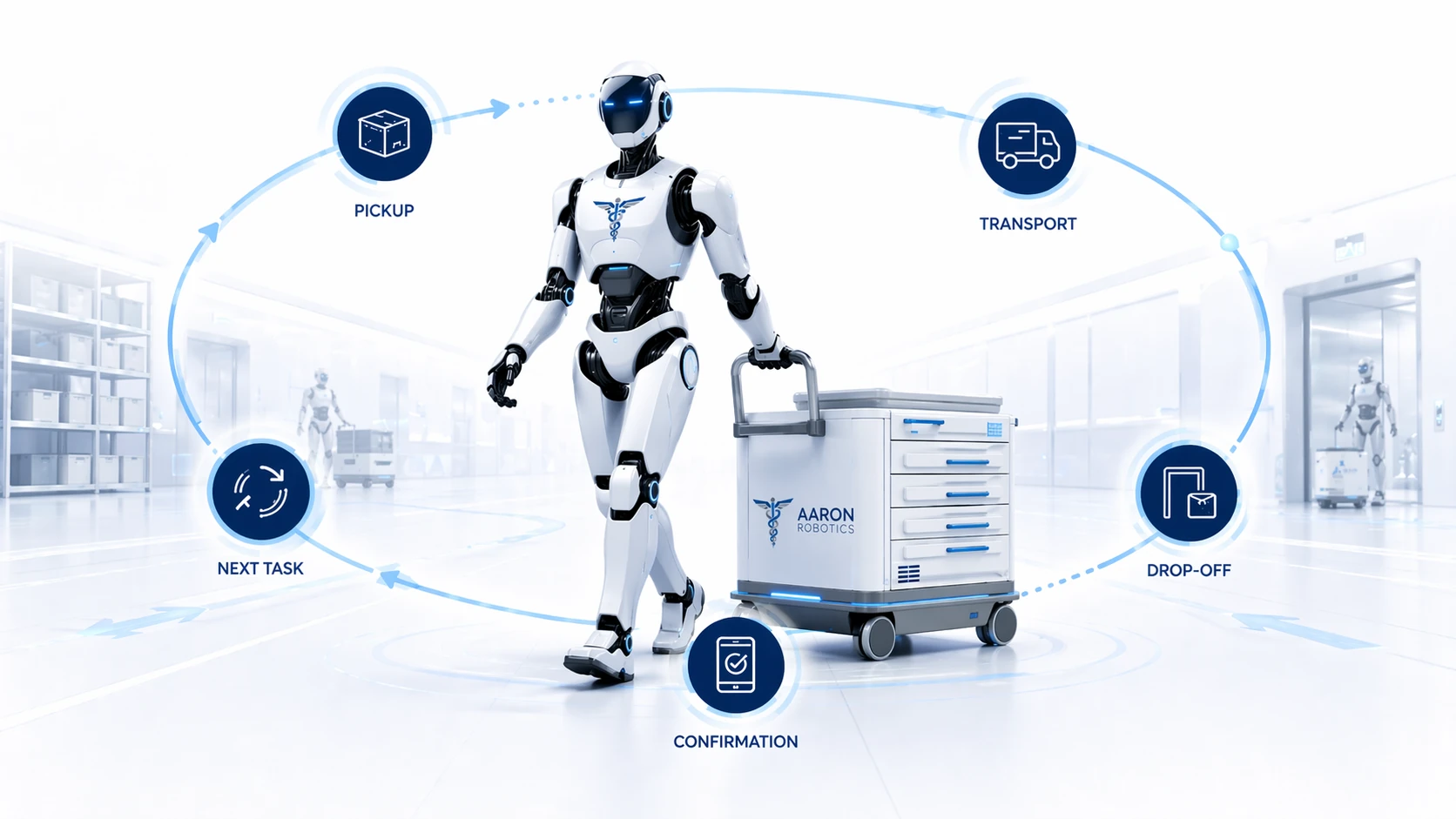
Not a general-purpose robot. A defined logistics service.
The first question is not “What can the humanoid do?” It is “Which recurring movement should the facility stop asking people to do?” Aaron maps that workflow and designs the service around it.
Supplies & consumables
Move staged materials from storage and supply rooms to defined unit handoff points.
Linens & returns
Support recurring clean-linen delivery and defined return movements along approved routes.
Meals & carts
Transport prepared carts or staged meal loads between service areas and designated destinations.
Equipment movement
Move approved, non-clinical equipment between known storage, staging and use locations.
Internal replenishment
Connect inventory and workflow data so completed movement can inform restocking activity.
Returns & repeat tasks
Close the loop with confirmation, return movement and next-task dispatch rather than stopping at delivery.
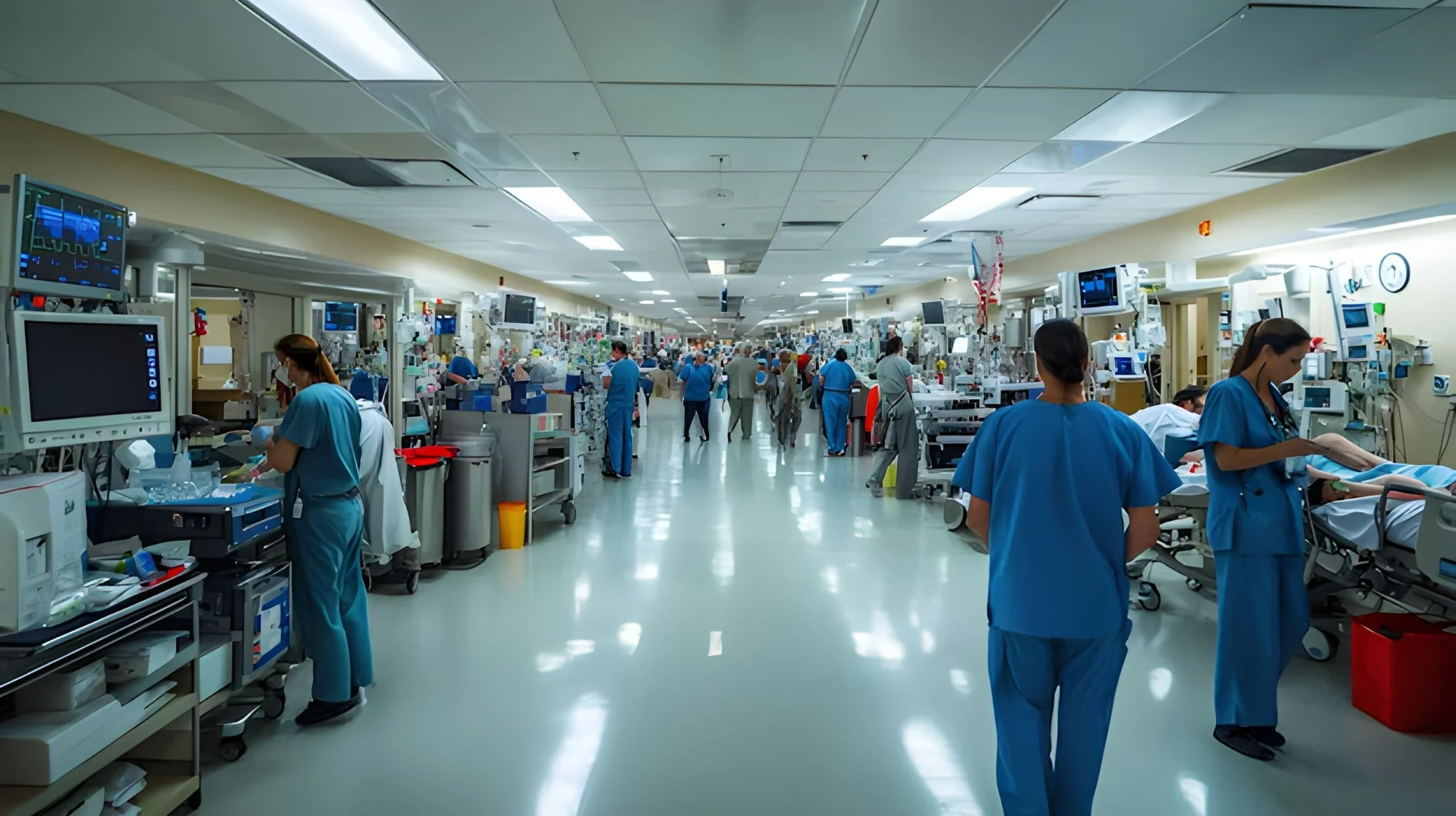
Movement is essential. It does not need to consume clinical attention.
When dedicated logistics capacity is thin, nurses and other staff absorb the walking, searching and transport burden. Aaron is designed to give that time back without changing the facility’s clinical standard of care.
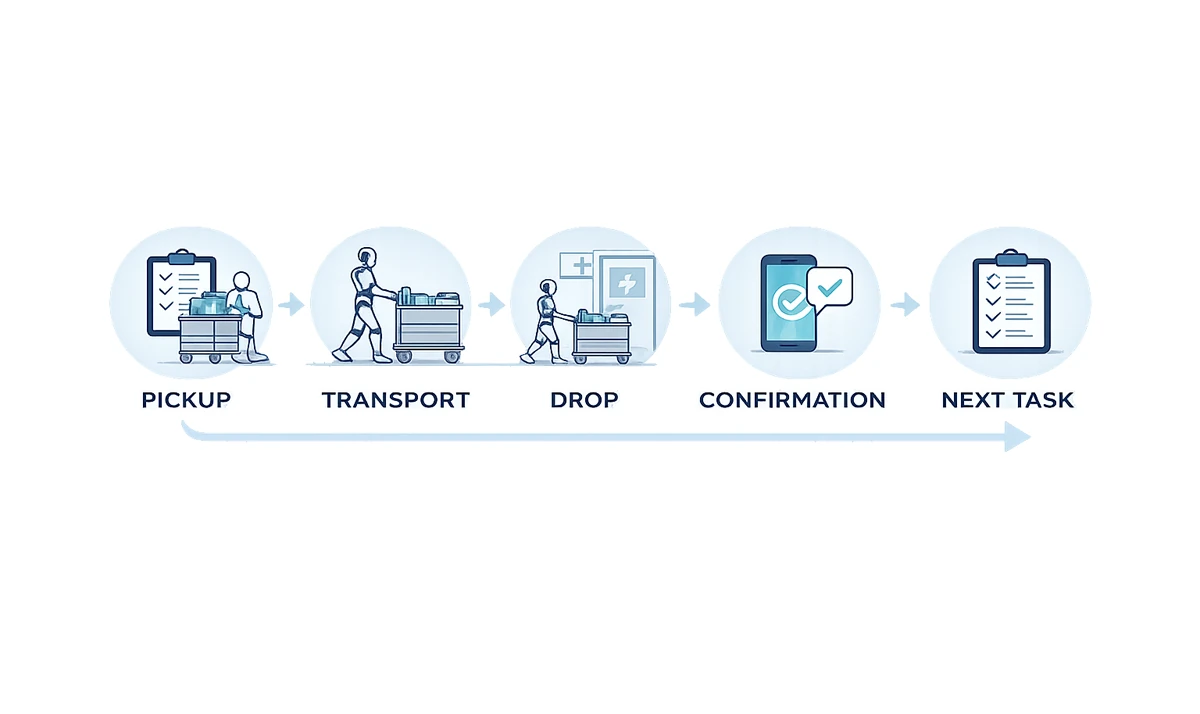
Boundaries make autonomy useful.
Every initial workflow has a named operating owner, mapped route, material category, pickup point, handoff point, success condition and escalation path.
- Constrained task catalog. Start with repeatable movements before expanding capability.
- Human-in-the-loop fallback. Exceptions can stop, retry, reroute or escalate.
- Auditable outcomes. Tasks generate operating data rather than disappearing into manual work.
- Progressive expansion. Add routes and endpoint skills only after the preceding workflow is proven.
Buy the work, not the machine.
Aaron is provided as a Robot-as-a-Service model. The facility receives a managed operating service rather than having to build an internal robotics organization.
- Qualified humanoid platform matched to the workflow.
- Neocortex software and workflow configuration.
- Monitoring and reporting tied to task completion and intervention.
- Support, maintenance and software updates managed as part of the service.

Have a repetitive route worth eliminating?
We can start with one material category, one route, one operating owner and one scorecard.